
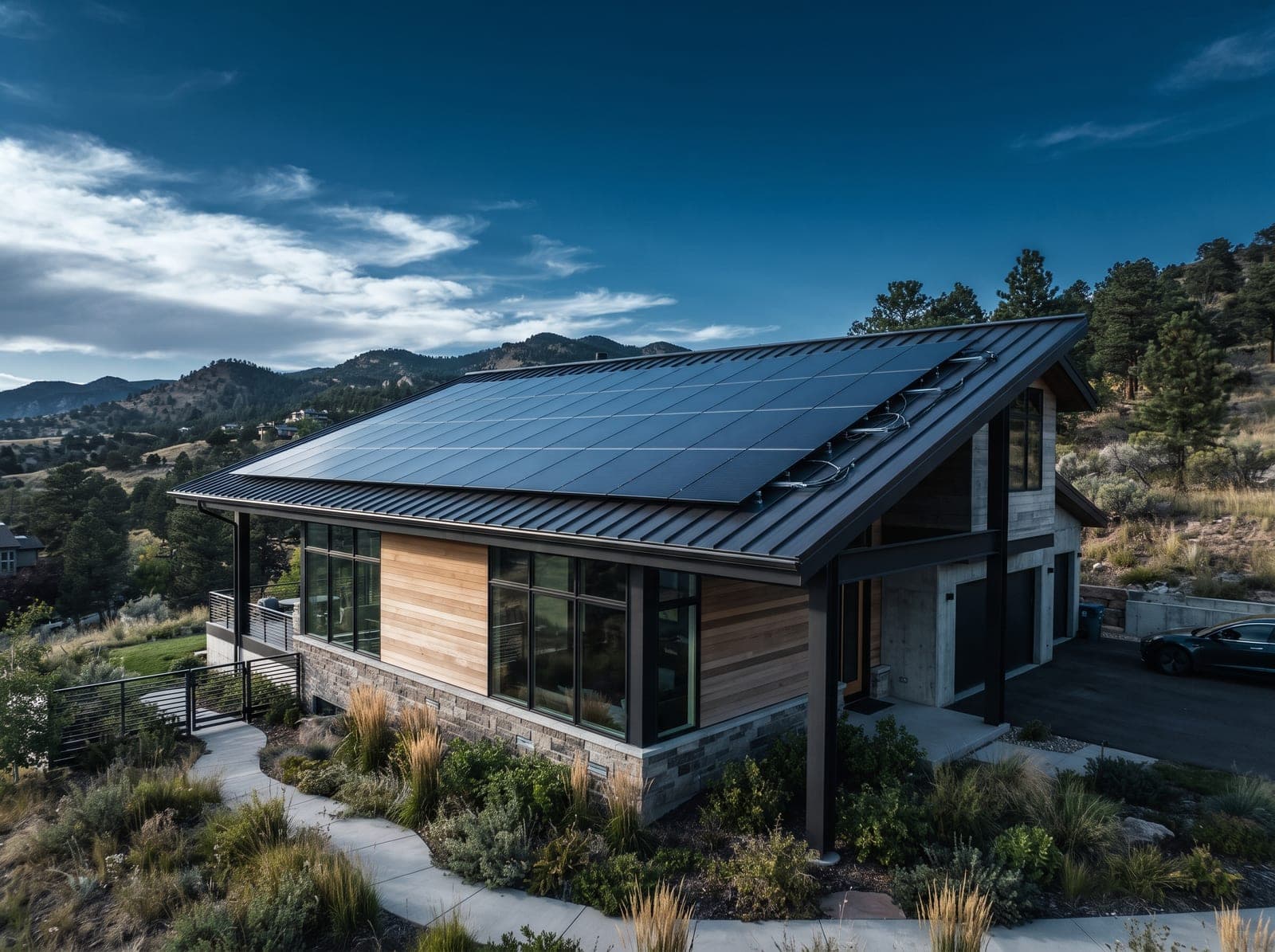
A solar array is a 25-year machine bolted to a roof. The panels are warranted for decades, but the system is only as reliable as its weakest electrical connection — and those connections live in full sun, cycle through daily heat and cold, and get rained on for their entire life.
A leading cause of solar underperformance and DC arc faults isn't the panels or the inverter — it's corroded, water-intruded connections. This guide covers exactly where and how to use UV-stable dual wall heat shrink tubing on PV wiring, where it belongs in a code-compliant install, and how to size it for everything from MC4 connector tails to heavy off-grid battery lugs.
Why Solar Wiring Is Brutal on Connections
Constant UV Exposure
Rooftop and ground-mount wiring sees direct sunlight every day for 25 years. UV radiation breaks down ordinary polymers — PVC tape chalks and cracks, and non-stabilized tubing turns brittle. UV-stabilized black polyolefin uses carbon black as a physical barrier that scatters UV and chemical stabilizers that neutralize the free radicals sunlight generates, so it stays flexible and sealed for the life of the array.
Daily Thermal Cycling
A panel backsheet and the conductors behind it can swing from below freezing at dawn to 70–90°C in summer afternoon sun, every single day. That expansion and contraction works connections loose and pumps humid air in and out of any gap. Adhesive-lined heat shrink bonds mechanically to the cable jacket and stays sealed through thousands of cycles.
Moisture, Condensation & Standing Water
Rain, snowmelt, dew, and condensation inside conduit all find their way to connections. Water wicks along stranded conductors under any unsealed sleeve and corrodes the copper from the inside out — raising resistance, generating heat, and eventually causing arc faults. A dual wall adhesive seal blocks that path completely.
Decades, Not Years
Automotive wiring might need to last 10–15 years. A solar connection needs to outlast the inverter and match the 25-year panel warranty. That long horizon is exactly why professional installers seal field splices and exposed terminations rather than relying on tape or bare crimps.
Where Heat Shrink Belongs in a PV System
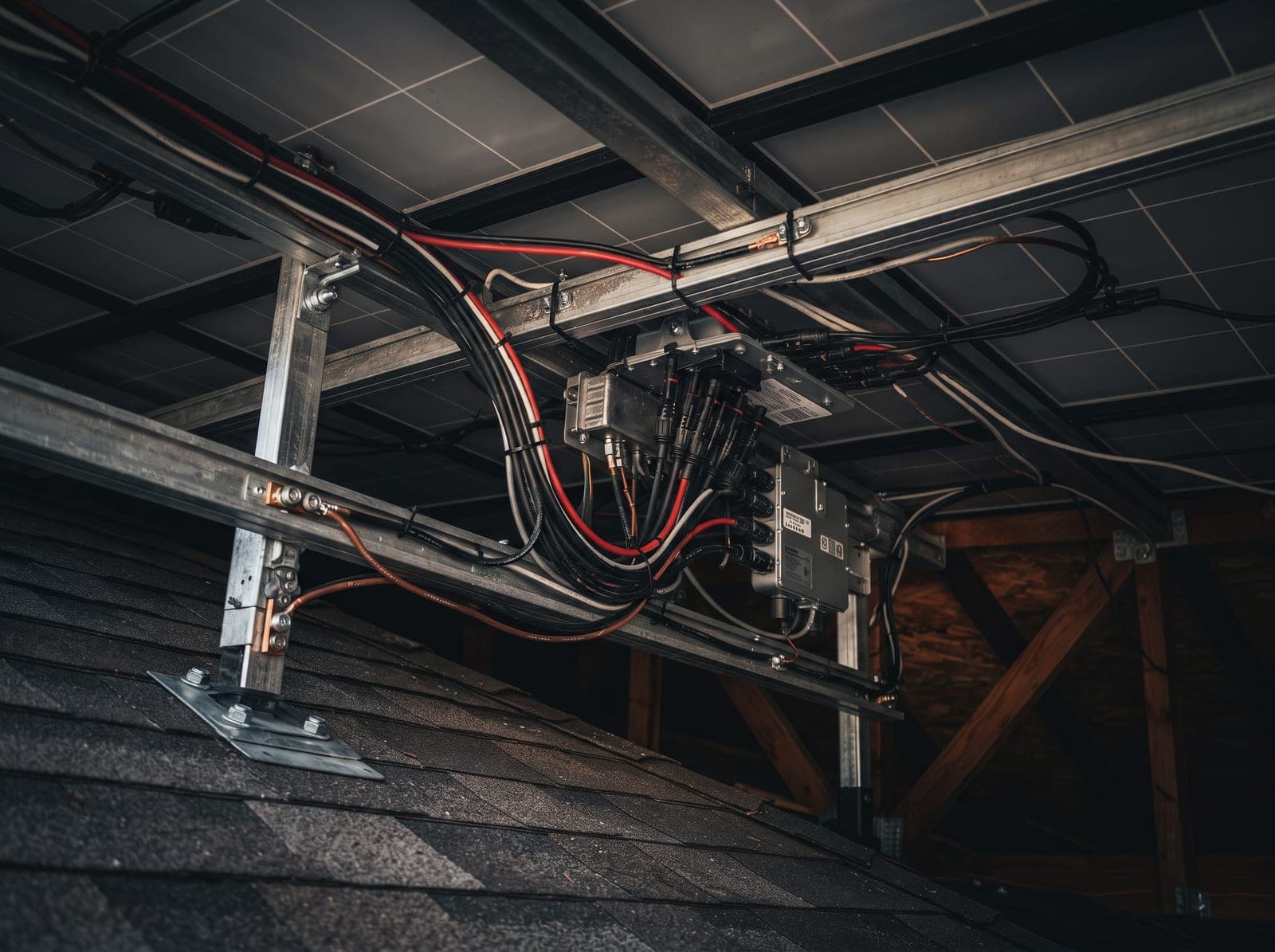
Heat shrink is a sealing, strain-relief, and UV-protection layer — not a substitute for code-rated PV wire (UL 4703) or properly tooled, UL-listed connectors. Used correctly alongside those components, it is one of the cheapest ways to add decades of reliability. Here is where it earns its place:
MC4 Connector Tails & Strain Relief
3:1 Dual Wall · 1/2"A field-installed MC4 must be crimped and assembled with the proper tool to be rated. A sleeve of 3:1 dual wall over the cable-to-connector transition adds UV protection and strain relief, and seals the point where moisture most often creeps in behind the connector body.
PV String Field Splices
3:1 Dual Wall · 1/4"–3/8"When a run is extended or a damaged jacket is repaired, the crimped splice must be sealed. Dual wall adhesive-lined tubing encapsulates the crimp and creates an IP67 moisture barrier — the only acceptable method for an outdoor DC splice.
Combiner & Junction Box Entries
3:1 Dual Wall · 3/8"–1/2"Where conductors enter enclosures and pass strain-relief glands, a dual wall sleeve protects the jacket from abrasion at the entry and seals against water tracking down the cable into the box.
Off-Grid Battery-Bank Cabling & Lugs
3:1 Dual Wall · 3/4"–1-1/4"On 12/24/48V DC battery banks, large crimped lugs on welding-style cable are well within the 600V rating. Dual wall over each lug barrel insulates the terminal, prevents corrosion, and color-codes polarity — standard practice on solar storage builds.
Grounding & Bonding Jumpers
3:1 Dual Wall · 1/4"–1/2"Exposed equipment-grounding crimps and lay-in lug connections benefit from a sealed, UV-stable cover to stop the galvanic corrosion that loosens bonds over time.
Safety & Code Note
Heat shrink does not raise a conductor's voltage rating. On grid-tied PV strings that operate at 1000 Vdc or 1500 Vdc, the wire must be code-rated PV cable and the connectors UL-listed and tool-assembled. Use heat shrink as a UV and moisture cover over those already-rated parts. If a supplier offers you 1000V rated tubing, ask which standard, edition and file number backs the number. Always follow the NEC and your AHJ for PV splicing and grounding.
Single-Wall vs Dual-Wall for Solar
| Property | Dual Wall (Adhesive-Lined) | Single Wall / Tape |
|---|---|---|
| Moisture seal | ✓ Complete — adhesive flows and fills gaps (IP67) | None — water wicks under the sleeve |
| UV stability (black) | ✓ Carbon-black stabilized for 25-yr outdoor life | Tape chalks; clear tubing cracks |
| Temperature range | ✓ −55°C to +125°C continuous | PVC tape softens above ~80°C |
| Adhesion to jacket | ✓ Bonds mechanically — vibration & cycle proof | Loosens and peels over time |
| Fits over connectors | ✓ 3:1 ratio slides over MC4 / lug bodies | 2:1 often too tight to recover |
| Service life outdoors | ✓ Matches the array (20–25+ years) | 1–3 years before failure |
For an in-depth look at why the adhesive wall matters, see our guide to adhesive-lined heat shrink tubing.
Sizing Heat Shrink for Solar Wiring
Size for the widest point the tube must pass over — usually a connector body or crimp lug, not the bare wire. The 3:1 ratio then recovers tightly onto the thinner cable behind it.
| Conductor / Joint | Typical PV Use | Recommended 3:1 Dual Wall |
|---|---|---|
| 14–12 AWG | Microinverter drops, small DC leads | 3/16" – 1/4" |
| 10 AWG / 6 mm² PV wire | Standard string / module wiring | 1/4" – 3/8" |
| MC4 connector body / strain relief | Connector tail seal | 1/2" |
| 8 AWG | Combiner outputs, short DC runs | 3/8" – 1/2" |
| 6–4 AWG | Battery-bank interconnects | 1/2" – 3/4" |
| 2 AWG – 1/0 | Inverter & battery cabling | 3/4" – 1" |
| 2/0 – 4/0 lugs | High-current battery lugs / bus | 1" – 1-1/4" |
Not sure which size to order for a specific connector? Message us on WhatsApp → or check the full size-chart guide.
Step-by-Step: Sealing a Solar Connection
Clean the Cable
Wipe the jacket and any connector body with isopropyl alcohol and let it flash off. Adhesive will not bond to dust, grease, or the silicone film on new cable — contamination is the number-one cause of a leaking seal.
Slide the Tubing On First
Cut a length long enough to overlap at least 1 inch onto the cable on each side of the joint, and slide it well clear before you crimp. There is no way to add it after the connection is made — this is the step people forget.
Make a Gas-Tight Crimp
Crimp the splice or lug with a ratcheting crimper for full compression, then tug-test it. Heat shrink seals and protects a good crimp; it cannot fix a loose one. For soldered joints, let them cool fully before sliding the tube over.
Heat from the Center Outward
Center the tube over the joint and apply heat from the middle toward each end with a temperature-controlled heat gun (300–400°C). Working outward pushes trapped air out the ends. Rotate the work for even, all-around recovery. Never use an open flame — it scorches the tube and leaves the adhesive unmelted.
Look for the Adhesive Bead
Keep heating until a small bead of melted adhesive squeezes out at both ends. That bead is your visible confirmation of a 360° waterproof seal. Let the joint cool undisturbed before flexing, routing, or securing it.
SHOP HELIXAL 3:1 DUAL WALL FOR SOLAR
UV-stable, adhesive-lined, −55°C to +125°C, 600V. 13 sizes from 3/32" to 2". Ships fast across the USA & Canada.
TRADE & WHOLESALE
Wiring arrays for a living?
Helixal supplies UV-stable dual wall heat shrink in bulk to solar installers, electricians, and distributors — all 13 sizes across 3 product lines, with competitive volume pricing.
View Wholesale Options →Frequently Asked Questions
Can you use heat shrink tubing on solar panel wiring?
Yes. UV-stabilized dual wall adhesive-lined heat shrink is the professional choice for sealing and strain-relieving solar connections — MC4 tails, PV string splices, combiner entries, and off-grid battery cabling. It supplements code-rated PV wire and connectors with a waterproof, UV-resistant barrier that helps connections last the 25-year life of the array.
What shrink ratio do I need for solar connectors?
Use 3:1 (or higher). A 3:1 tube expands enough to slide over a bulky connector body or crimped lug, then shrinks tightly onto the thinner cable behind it — something 2:1 cannot do. The adhesive inner wall melts and flows to form the waterproof seal.
Does heat shrink hold up to UV and sunlight?
Black UV-stabilized polyolefin uses carbon black to block and scatter UV plus chemical stabilizers to neutralize sun-driven free radicals, so it stays flexible and sealed outdoors for decades. Clear and light-colored tubing is not UV-stable — always use black dual wall for PV.
Is heat shrink tubing rated for solar voltage?
Helixal heat shrink is rated to 600V and −55°C to +125°C — fine for off-grid battery banks and 12/24/48V DC systems as primary insulation. On a grid-tied 1000 Vdc string, the conductor must already be code-rated PV wire and the connectors UL-listed; there the heat shrink acts as a UV and moisture cover over those rated components, not the primary high-voltage insulation.
Can heat shrink waterproof a solar wire splice?
Yes — a crimped splice sealed with dual wall adhesive-lined heat shrink achieves an effective IP67 barrier when applied correctly, with adhesive flowing to block moisture from wicking along the strands. Single-wall heat shrink and electrical tape do not seal and should never be used on outdoor solar connections.
What size heat shrink for 10 AWG PV wire and MC4 connectors?
For 10 AWG (6 mm²) PV wire, 1/4" to 3/8" fits the cable; step up to 1/2" to cover and strain-relieve an MC4 connector body. For battery-bank lugs, move up to 3/4" or larger. Always size to slide over the widest point, then recover onto the cable.
Related Articles
How to Waterproof Wire Connections: Step-by-Step
The professional method for a permanent IP67 seal on outdoor connections.
Heat Shrink for Battery Terminals: Complete Guide
Corrosion-proof battery-bank lugs for off-grid and solar storage builds.
Summer Solar Install Guide: Sizing, Savings & US Incentives
Planning the install itself — system sizing, incentives, and wiring that lasts 25 years.
What Is Adhesive-Lined Heat Shrink Tubing?
How the hot-melt inner wall creates a true waterproof bond.
Heat Shrink Size Calculator — Free Tool
Enter your wire gauge or diameter and get the exact heat shrink size for 2:1, 3:1, or 4:1.
Built for 25 Years Outdoors
Shop Helixal Heat Shrink Direct
UV-stable 3:1 dual wall adhesive-lined heat shrink in 13 sizes. Rated −55°C to +125°C, 600V. Ships fast across the USA & Canada — secure direct checkout.