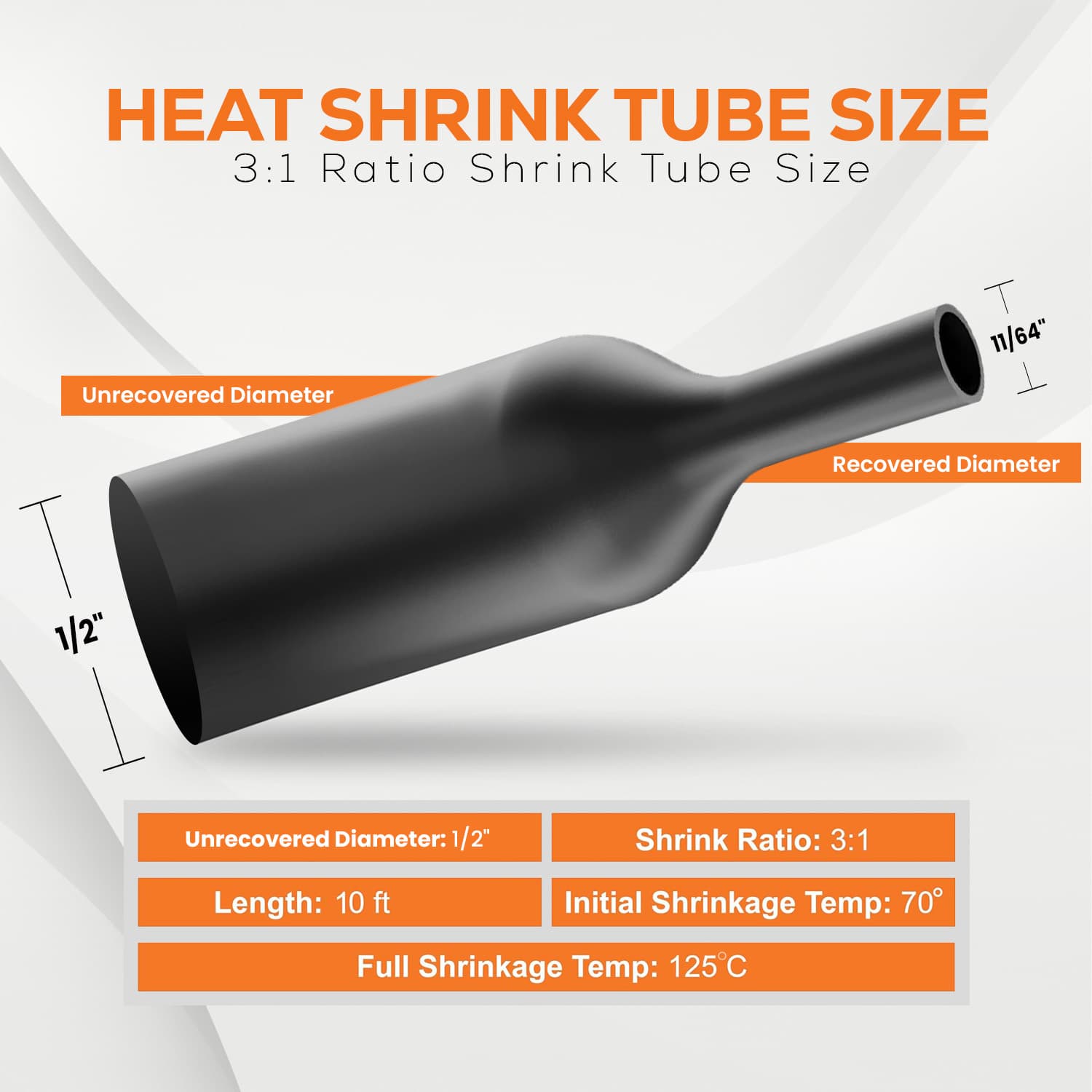
Sizing & Application — 1/2 inchThe battery cable size, and the lug that decides it.
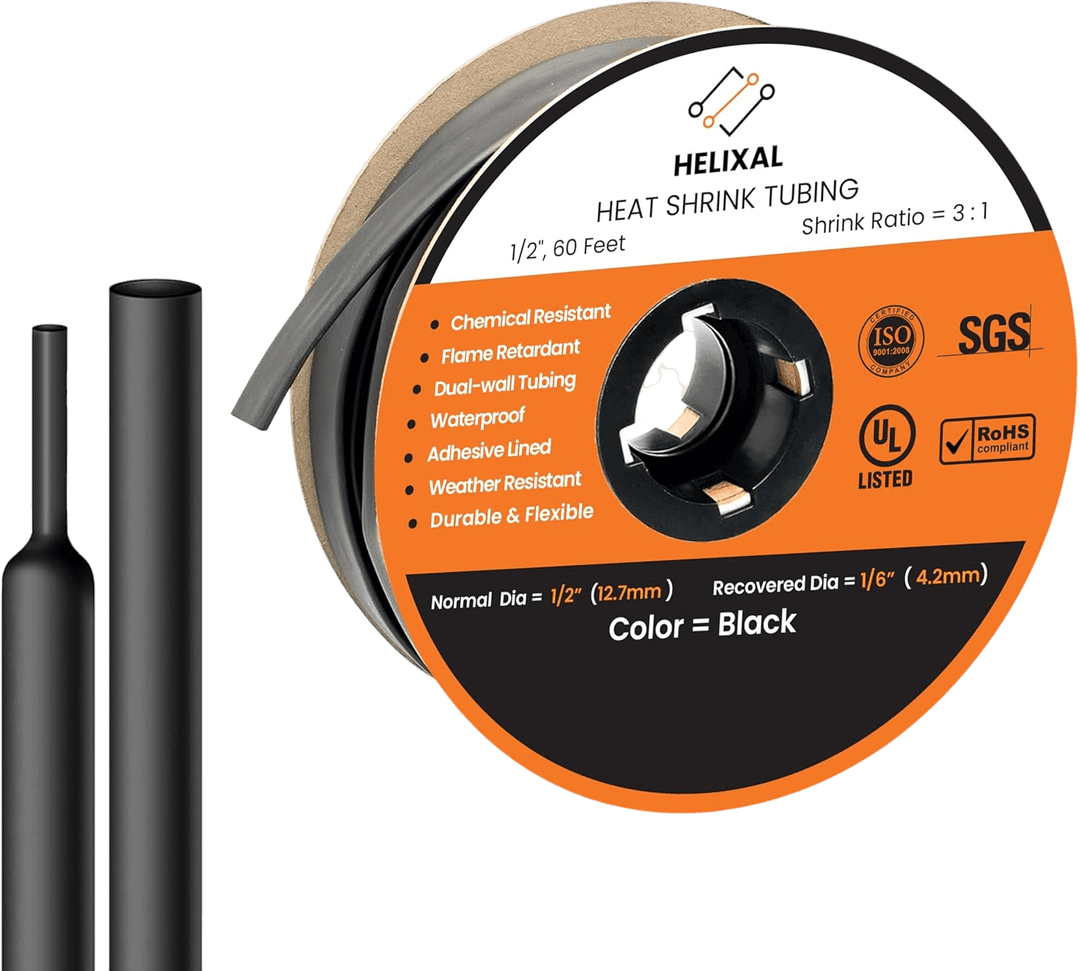
1/2 inch (12.7mm) is the 2–4 AWG size — primary battery cable, inverter and LiFePO4 main leads, winch feeds, welding leads, and the heavy runs on a trailer or a rig. It expands to 12.7mm and recovers to roughly 4.2mm, drawing the hot-melt liner hard onto the jacket. It is the second most-ordered size we make, and almost every one of those rolls is going over a crimped lug rather than bare cable — which is exactly where the sizing question lives.
The cable is not the widest part
4 AWG cable is about 8.5–9.5mm over the insulation and 2 AWG about 10.5–11.5mm, so 1/2" clears either one comfortably as bare cable. Put a crimped lug on the end and the numbers change: the barrel of a 2 AWG ring lug typically measures 11–13mm across, and a heavier-walled or double-crimped barrel goes past that. A tube that will not pass the barrel is not a sizing near-miss, it is a tube you cannot fit.
So the rule at this size is worth stating plainly — measure the barrel, not the cable, add 20–30% clearance, and size to that. For 4 AWG into a standard lug, 1/2" is usually right. For 2 AWG into anything heavy, step up to 5/8" (16mm) and accept the slightly looser recovery on the cable side; the 3:1 ratio is there precisely so one piece can clear a fat barrel and still close down onto the jacket behind it.
Fit reference for 1/2 inch
| Conductor | ABYC ampacity | Bare cable / splice | Over a crimped lug |
|---|
| 4 AWG | 70 A | 1/2" — ideal | 1/2" if barrel ≤10mm, else 5/8" |
| 2 AWG | 95 A | 1/2" — ideal | Step up to 5/8" |
| 1/0 AWG | 125 A | Tight — use 5/8" | 5/8" to 3/4" |
| 6 AWG | 55 A | Loose — use 3/8" | 1/2" |
Expanded ID 12.7mm · recovered ~4.2mm · 3:1 ratio. Ampacity per ABYC E-11 Table XI, conductor bundled in an engine space.
At 70–95 amps a corroded crimp is a heat problem
Everything sealed at this size is carrying real current. A 4 AWG feed at 70 amps and a 2 AWG main at 95 amps have no margin for added resistance at the termination, and corrosion inside a crimp barrel adds it in exactly the worst place — a small, concentrated joint with a lot of energy passing through it. It does not announce itself either. The lug still looks sound, the circuit still works, and the first symptom is usually heat or a voltage drop measured somewhere else entirely.
The adhesive liner blocks the route in. It flows around the barrel and along the cut edge of the insulation, fills the void where the strands are exposed, and sets there — so the salt water, wash-down, or condensation never reaches the copper. It also bonds the sleeve down, which at this weight matters mechanically: a heavy cable coming off a vibrating alternator, starter, or winch motor puts real load into the transition, and a bonded sleeve carries some of it instead of walking clear of the joint.
A 2:1 single-wall sleeve does neither. It will slide over the cable and it will insulate, but it cannot pass a wide lug barrel at that ratio, it does not seal the ends, and it does not hold. On a high-current termination in a wet place, that is not a cheaper version of the same job.
Field notes
01 · Pre-warm the lugA 2–4 AWG lug is a serious heat sink. Warm the metal first, then come back to the tube — otherwise the adhesive sets against the thin jacket long before it has bonded to the barrel, and the sealed-looking end is not sealed.
02 · Two pieces on a stepped lugWhere the step from barrel to cable is severe, a single 1/2" piece bridges rather than conforms. Seal the cable side with 1/2" and cap the barrel with a short 5/8" over the top — cleaner than fighting one tube into two diameters.
03 · Mind the bootIf a terminal boot is going on, it goes on before the sleeve is shrunk and it needs the same clearance. Dry-fit the whole stack — boot, sleeve, lug — before any heat touches it.
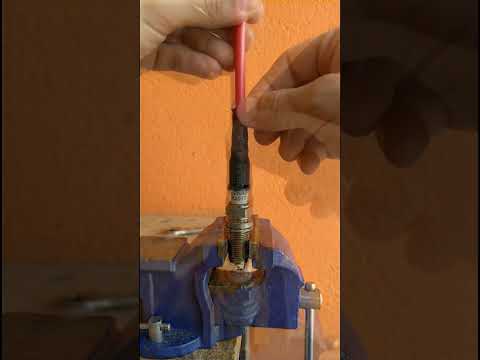
04 · Recover from the center outStart mid-tube and work outward so trapped air and excess adhesive push out of both ends. Over a fat barrel an air pocket leaves an open channel straight down to the crimp.
How far a 60 ft roll goes
Sixty continuous feet, cut to length. At a 3-inch cap over a battery lug that is roughly 240 terminations; at a 5-inch sealed splice with overlap on both sides, about 144. A dual-battery install, an inverter feed, or a winch fit takes a handful of feet.
Which is the point of buying it on a roll rather than in a pack. This is a size that gets used a few feet at a time across many jobs, and the 60ft roll is sized to be the one on the shelf that gets replaced when it runs out — not the one bought per install.
Keep reading →Heat Shrink for Battery Terminals · Automotive Heat Shrink Tubing · Heat Shrink Size Calculator · Size Chart & Selection Guide