
Automotive
heat shrink.
Adhesive-lined 3:1 dual wall, built for what a vehicle does to a joint — heat cycling, constant vibration, road salt, fuel and oil mist. Sealed, not just covered. Rated −55°C to +125°C.
- ◆ 360° waterproof seal
- ◆ Fuel & oil resistant
- ◆ UL 224 · 600V
- ◆ Ships in 24h from the USA
Pick it by the job.
The size you need follows the gauge you are working on. These are the sizes we would reach for on each job — all 3:1 dual wall, because everything here is exposed.
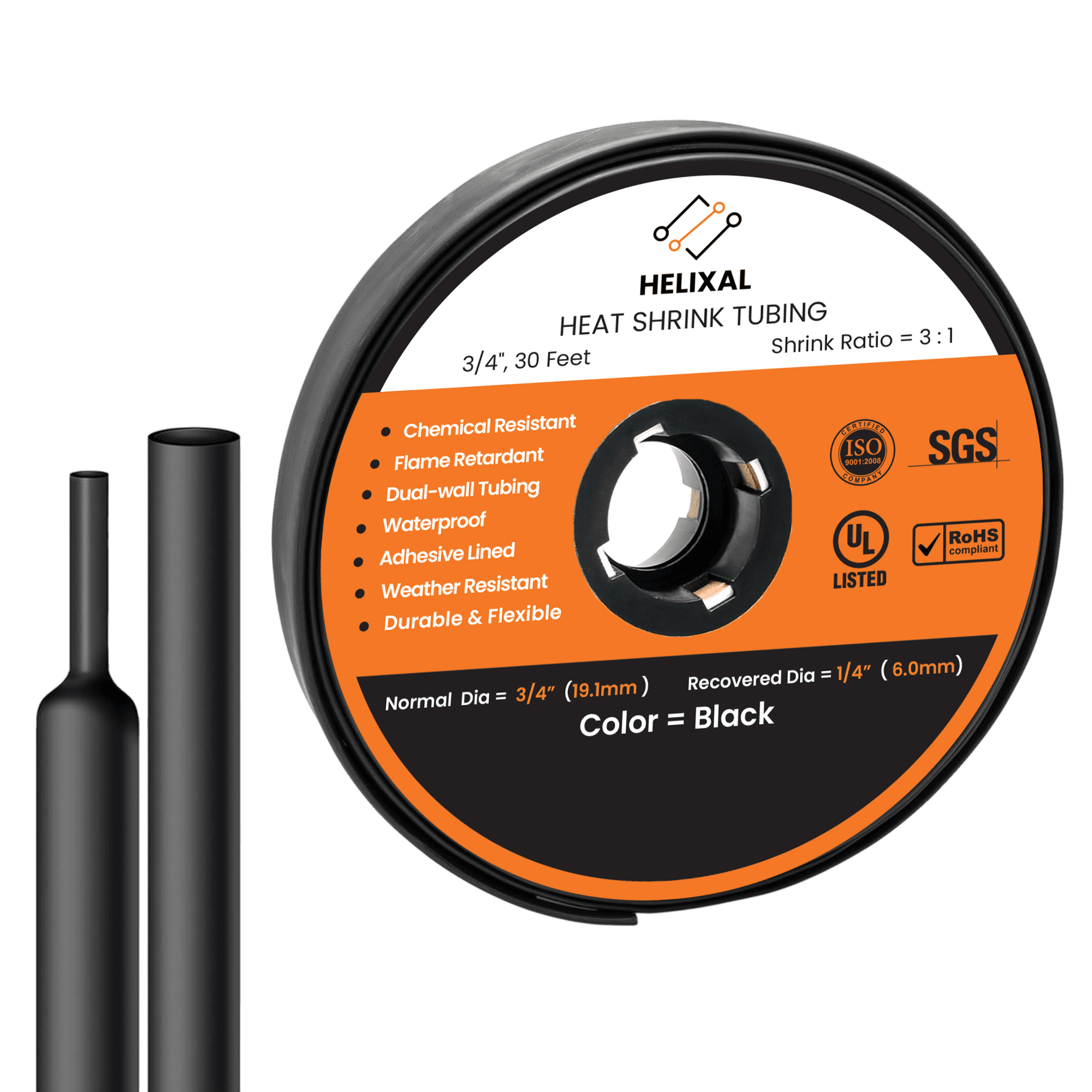
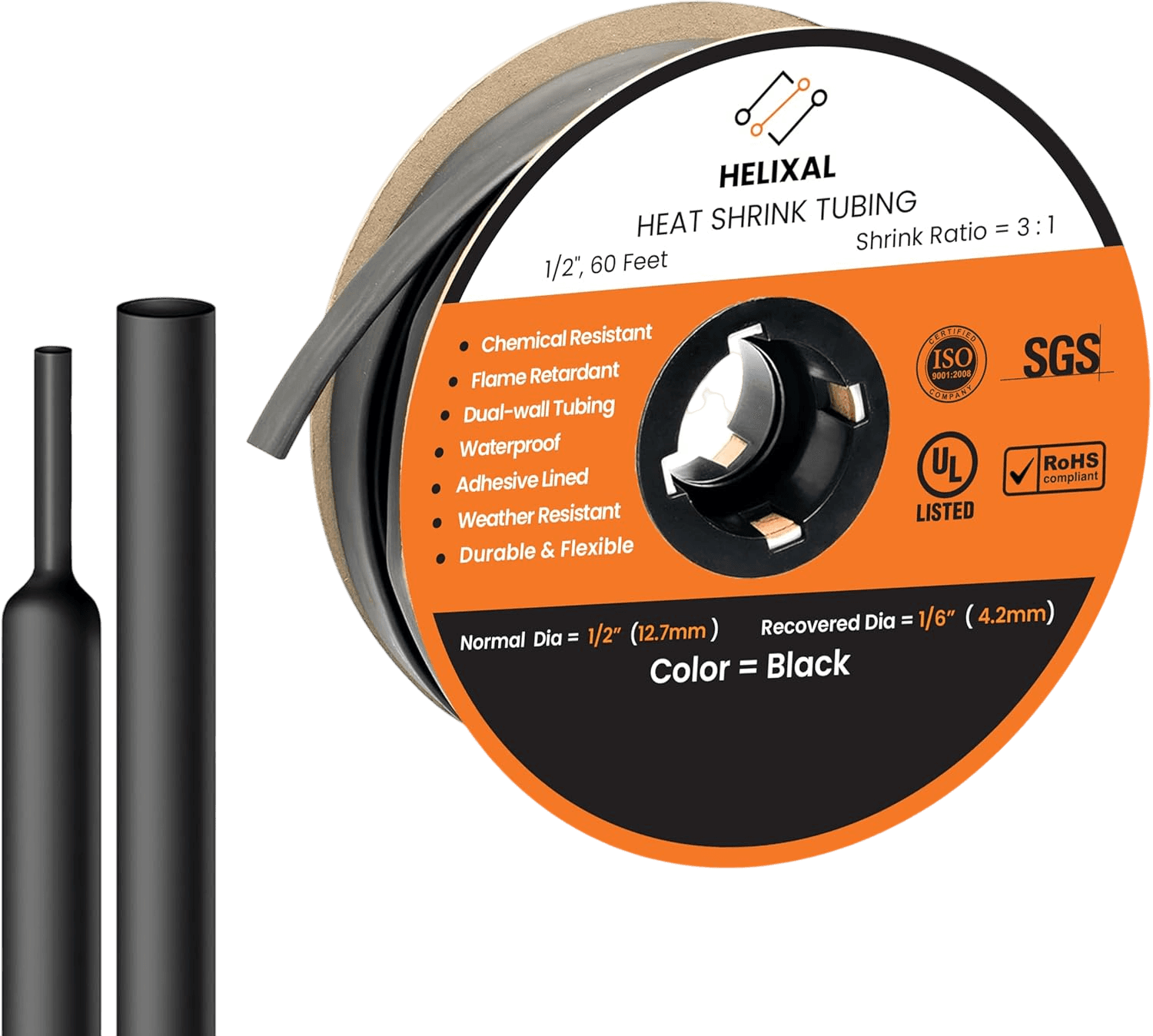
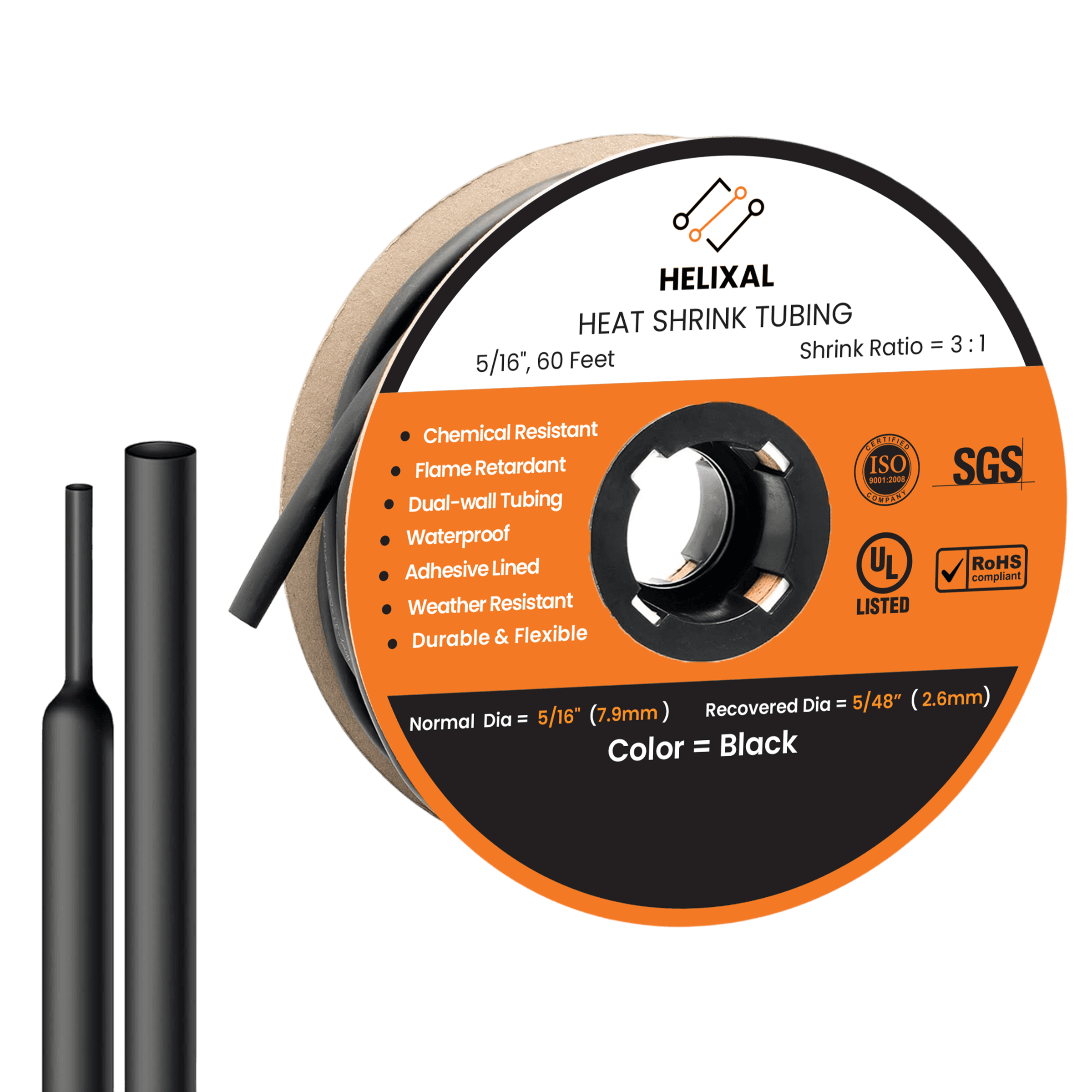
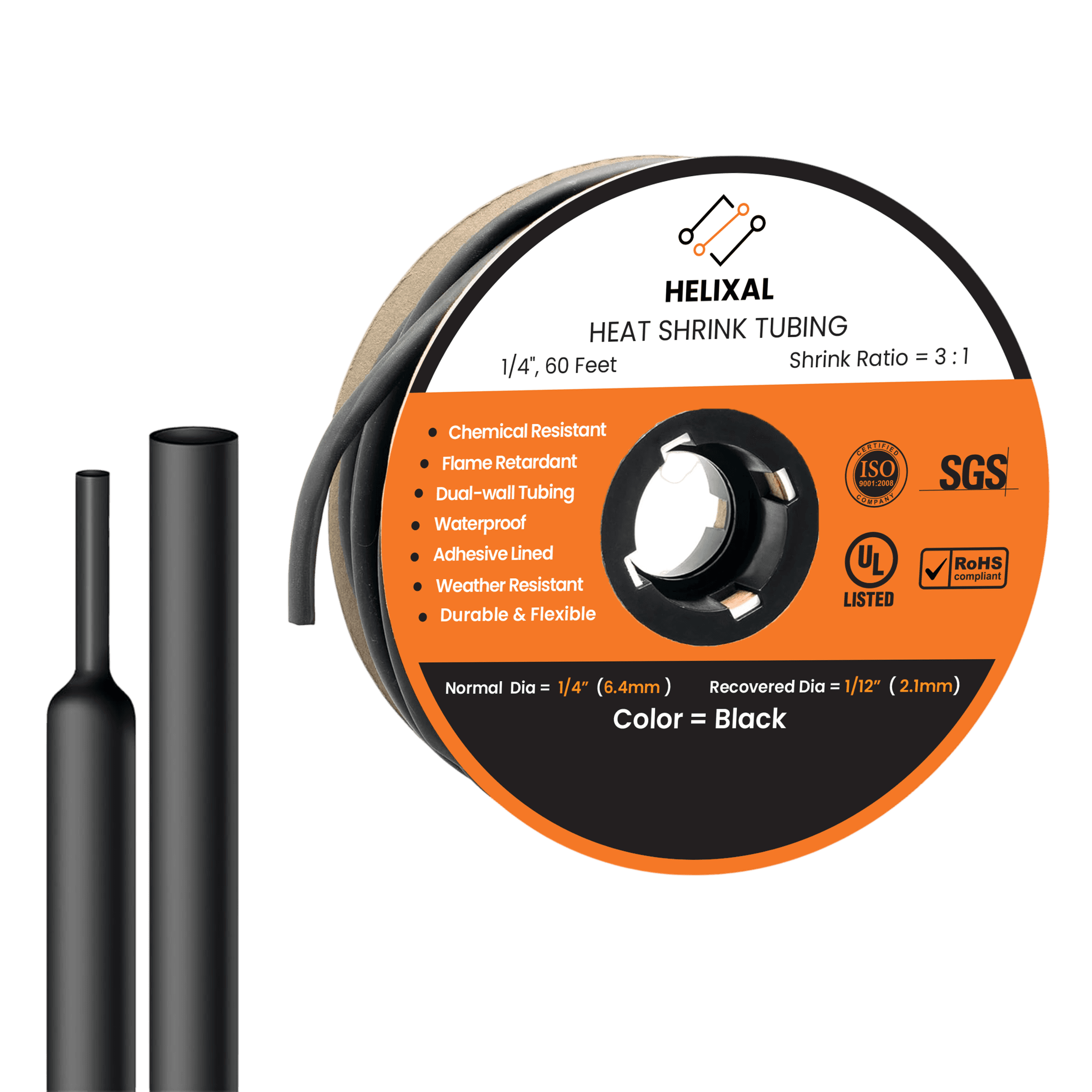
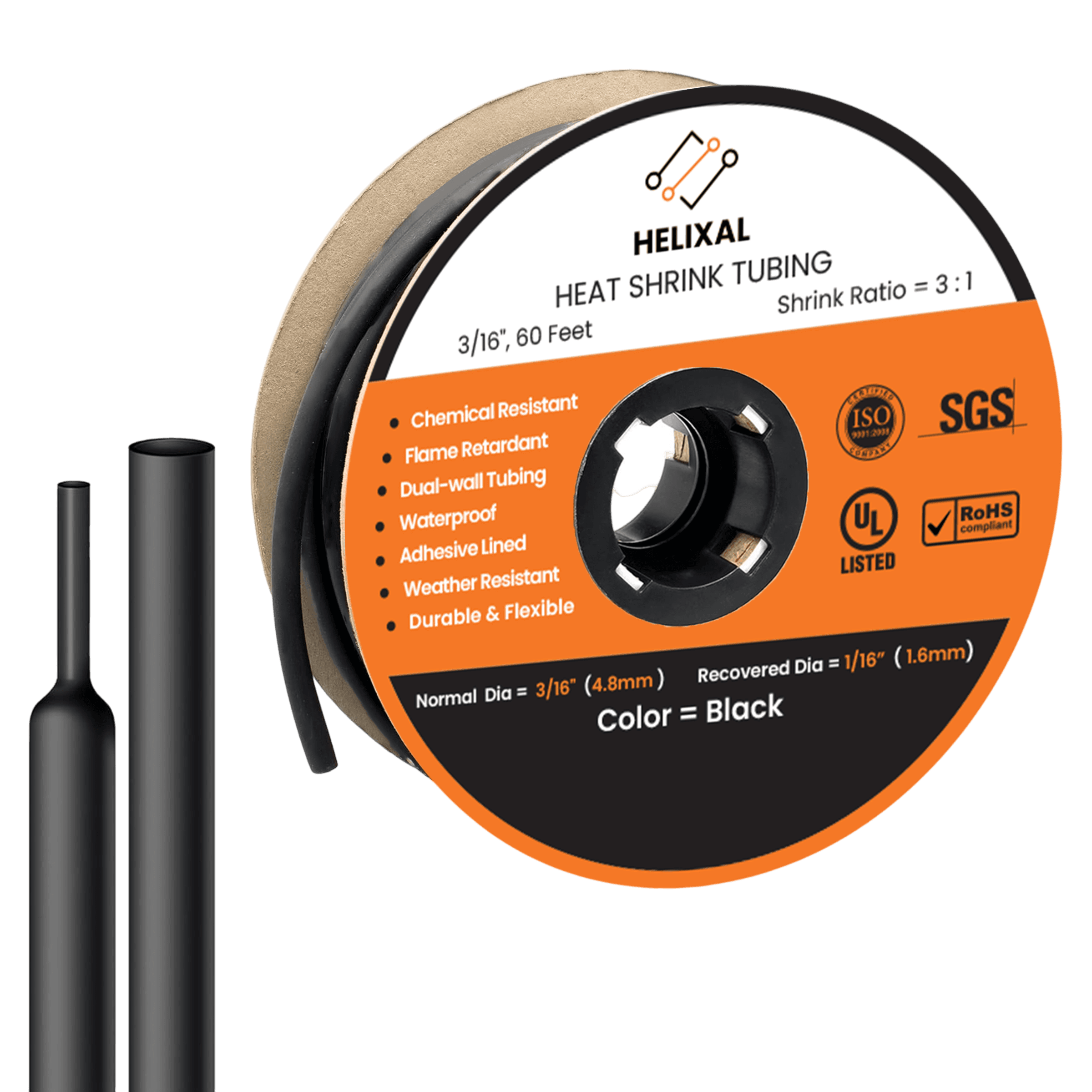
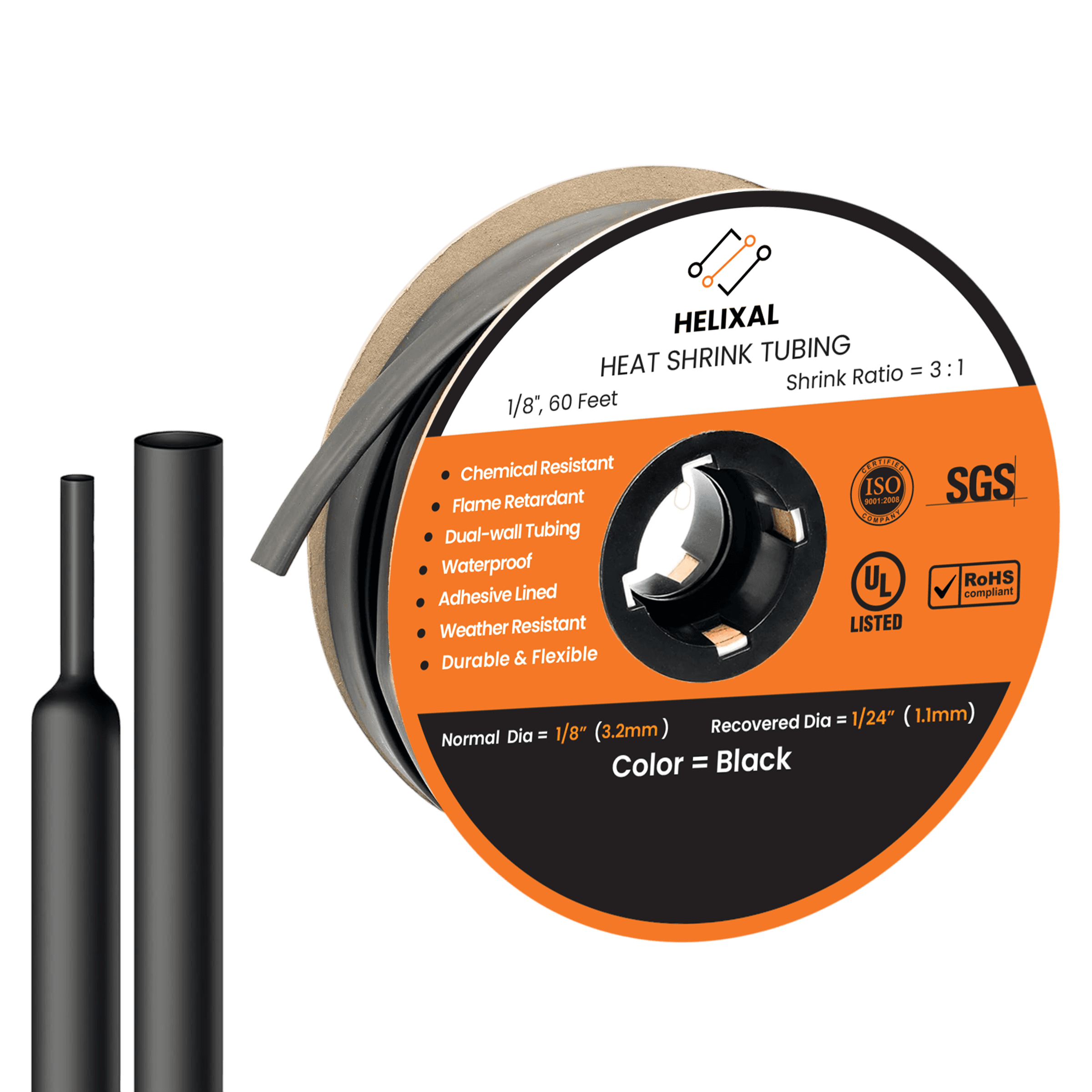
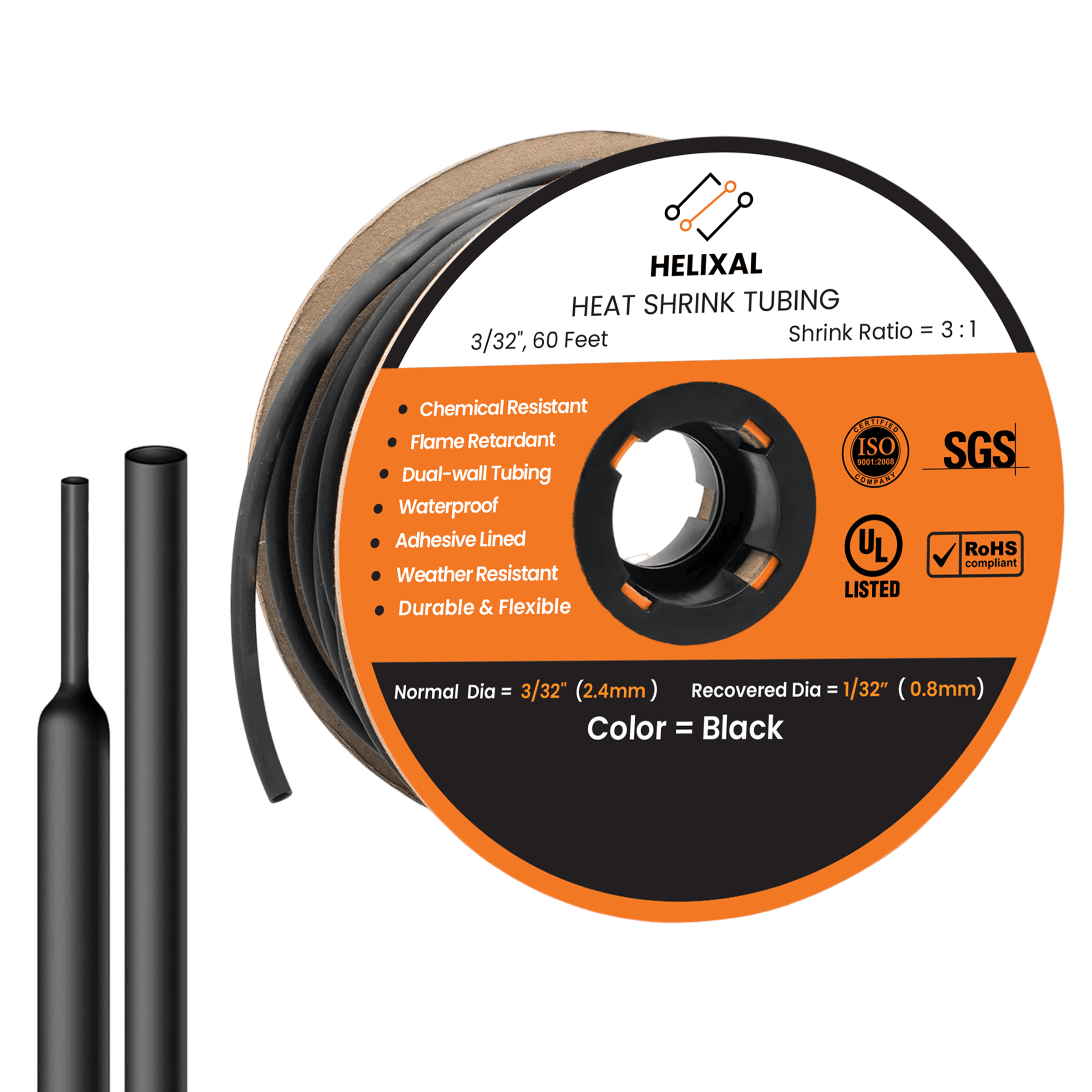
Why a car kills ordinary tubing.
Vibration is the one that catches people out. A single-wall sleeve is only resting on the wire, and thousands of miles of engine and road vibration slowly walk it along until one end of the joint is bare. It usually fails months after the repair, which makes it hard to connect back to the work.
Road salt is the one that does the damage. Salt water wicks along stranded copper underneath the insulation, so corrosion starts inside the loom where you cannot see it. By the time a circuit is reading high resistance, the green has often travelled several inches from the joint. A sealed sleeve stops it entering in the first place.
Add heat cycling and fuel or oil mist and you have four separate attacks on the same joint. Adhesive-lined dual wall answers all four at once: bonded so it cannot move, sealed so nothing gets in, and rated to 125°C continuous with resistance to fuel, chemicals and UV.
The full breakdown — engine bay temperature bands, specific jobs, and the application sequence — is in the automotive wire protection guide.
Automotive questions.
What heat shrink is best for automotive wiring?
Adhesive-lined dual wall at a 3:1 ratio. Under a vehicle a joint faces heat cycling, constant vibration, road salt and fuel or oil mist, and plain single-wall tubing handles none of that — it insulates but does not seal, and vibration slowly walks it along the wire until the joint is exposed. The adhesive liner bonds to the insulation instead of merely gripping it, so the sleeve stays put and water cannot enter at the ends.
What temperature rating do I need for the engine bay?
Our tubing is rated −55°C to +125°C continuous, which covers ambient engine-bay temperatures on essentially any road vehicle, including the area around the alternator and starter. What it does not cover is direct contact with exhaust components — manifolds, turbo housings and downpipes run far hotter, and those runs need a heat sleeve or a rerouted loom rather than heat shrink.
Can I use it on battery terminals and large cable?
Yes, and it is one of the better uses for a 3:1 ratio. A battery lug is a stepped shape — thick barrel, thinner cable — and a 2:1 sleeve sized to clear the barrel stays slack on the cable behind it. Recovering to a third closes that step properly. For 2/0 cable start at 3/4"; for 4/0 use 1". See our battery terminal guide for the full sequence.
Is automotive heat shrink the same as marine grade?
For our purposes yes — the same adhesive-lined dual wall construction serves both, which is why the tubing is often sold as "marine grade" and used on vehicles. The environments overlap heavily: salt, moisture, vibration. Marine work adds sustained immersion risk and is governed by ABYC E-11, so if the run is below the waterline follow the marine guidance rather than the automotive minimum.
Do I still need to crimp properly if the joint is sealed?
Yes. Heat shrink seals and supports a joint; it does not create the electrical connection. A poor crimp under a perfectly sealed sleeve still runs hot and still fails, and now you cannot see it happening. Crimp with the correct die, tug-test every joint before sleeving, and treat the tubing as protection for a connection that is already sound.
Related: the 3:1 dual wall line, battery terminals, butt connectors, and the size calculator.