
Marine
heat shrink.
Adhesive-lined 3:1 dual wall for salt water, spray and vibration. The adhesive bonds to the insulation and seals the joint end to end, so nothing wicks in behind it. Rated −55°C to +125°C.
- ◆ 360° waterproof seal
- ◆ Salt & UV resistant
- ◆ UL 224 · 600V
- ◆ Ships in 24h from the USA
Pick it by the job.
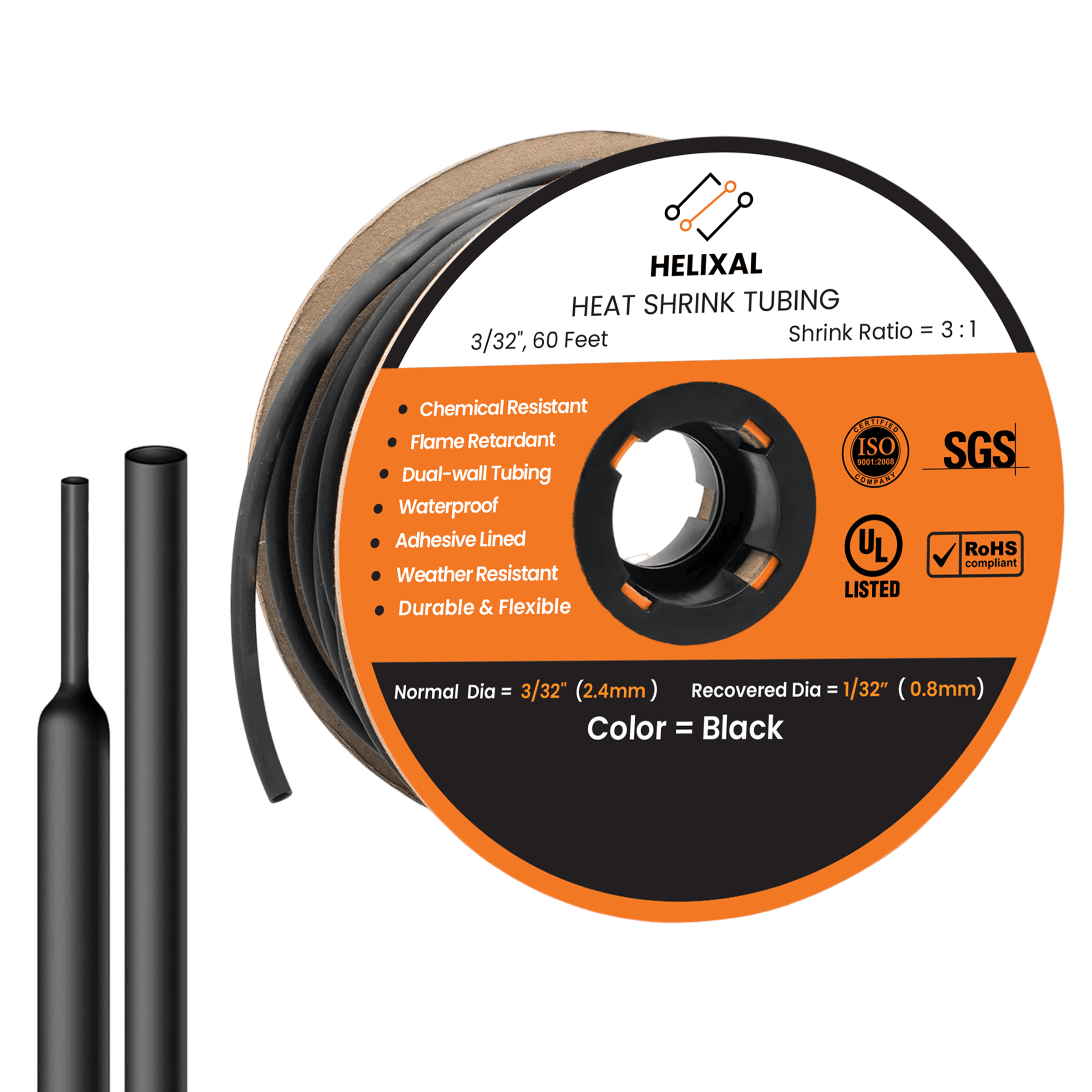
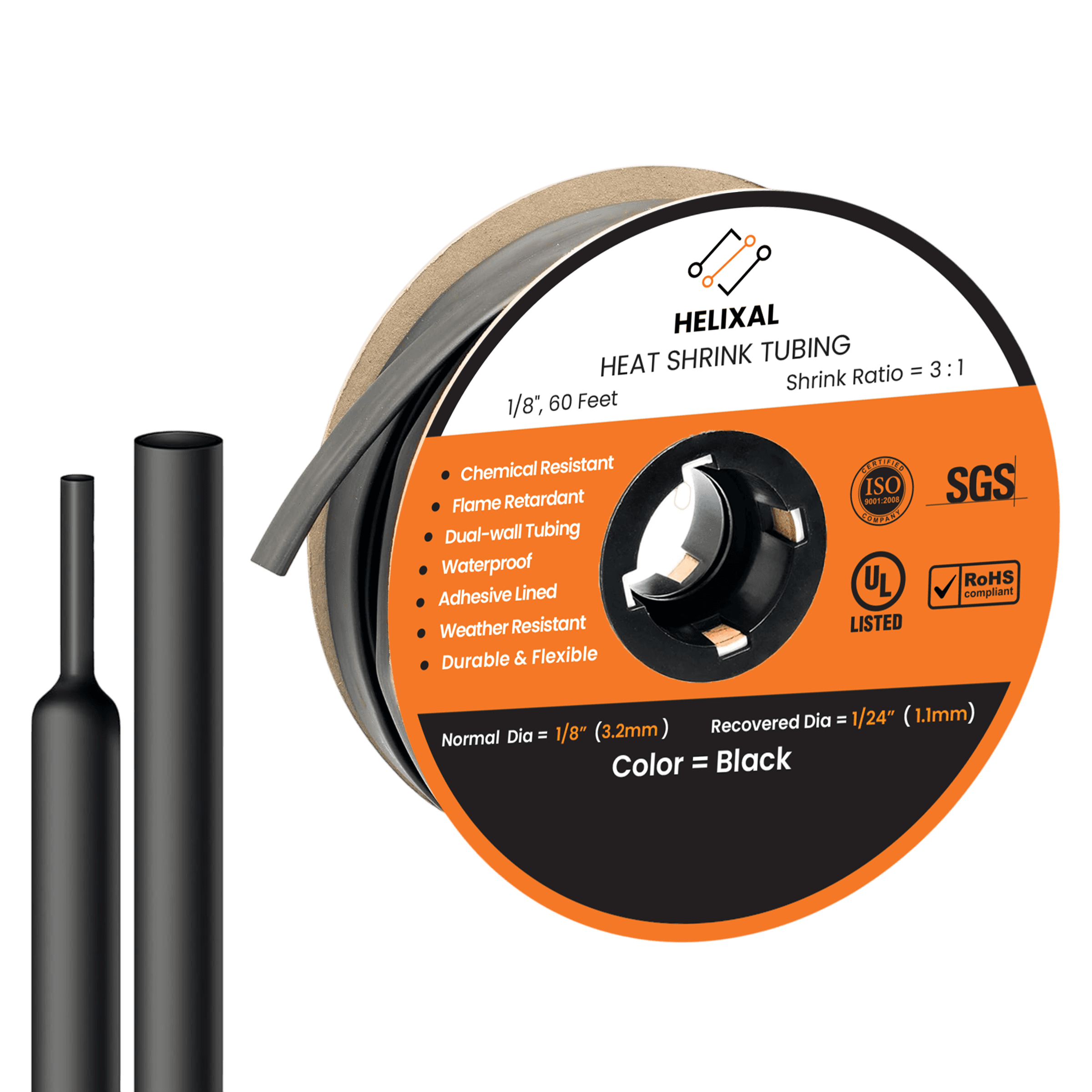
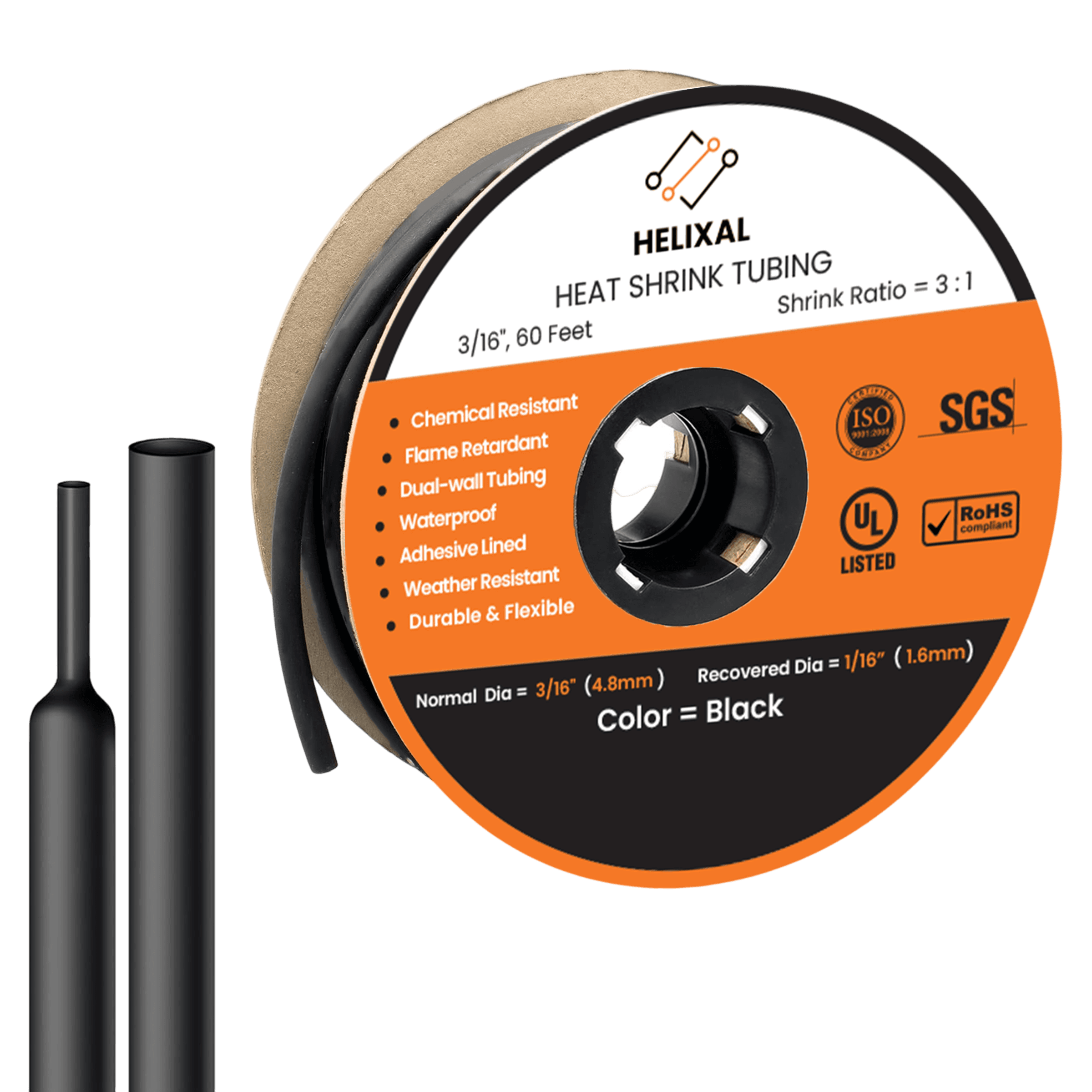
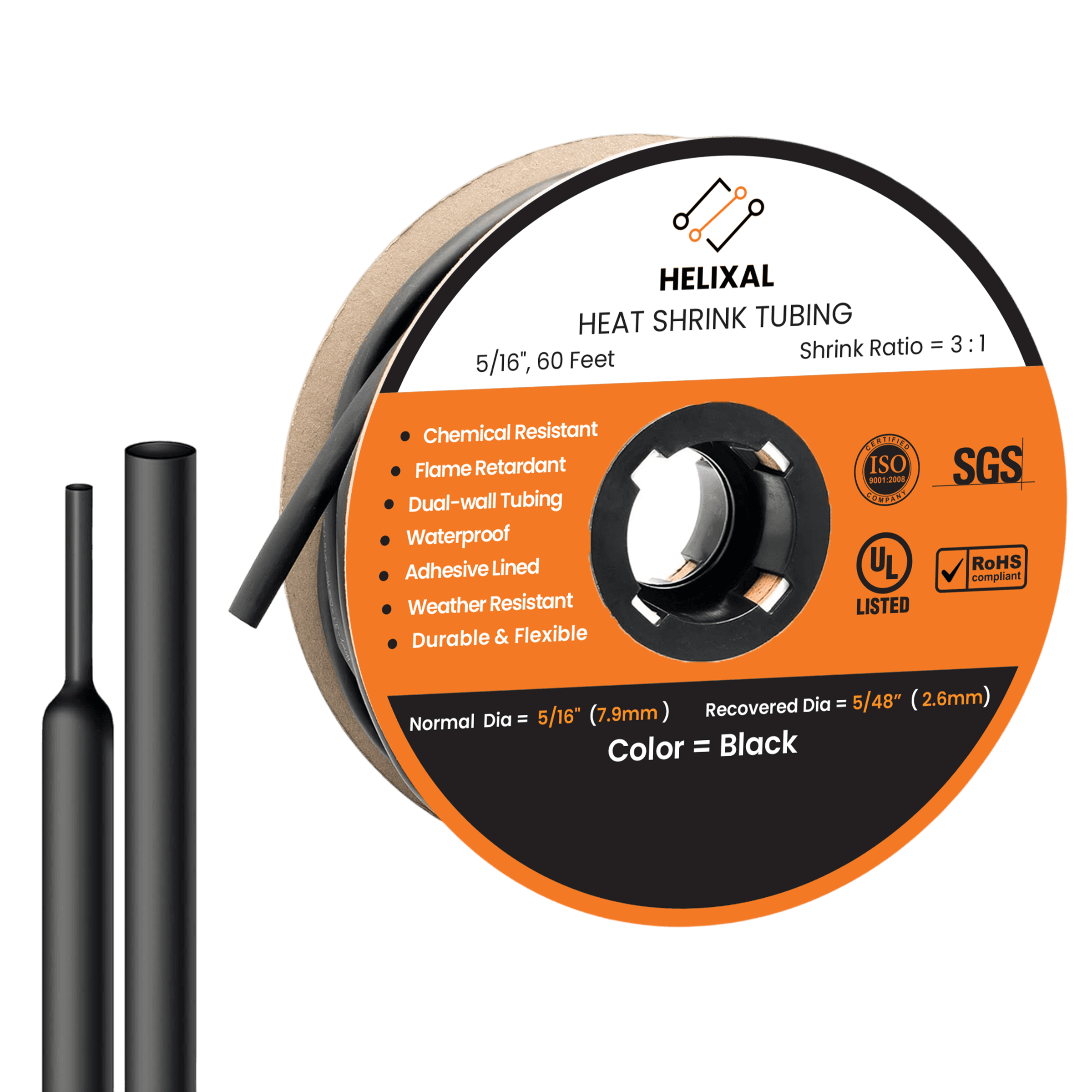
The size follows the gauge you are working on. These are the sizes we would reach for on each job — all 3:1 dual wall, because every one of them gets wet. The table runs from the thin instrument and lighting wiring most boat jobs actually involve up to the battery bank at the bottom.
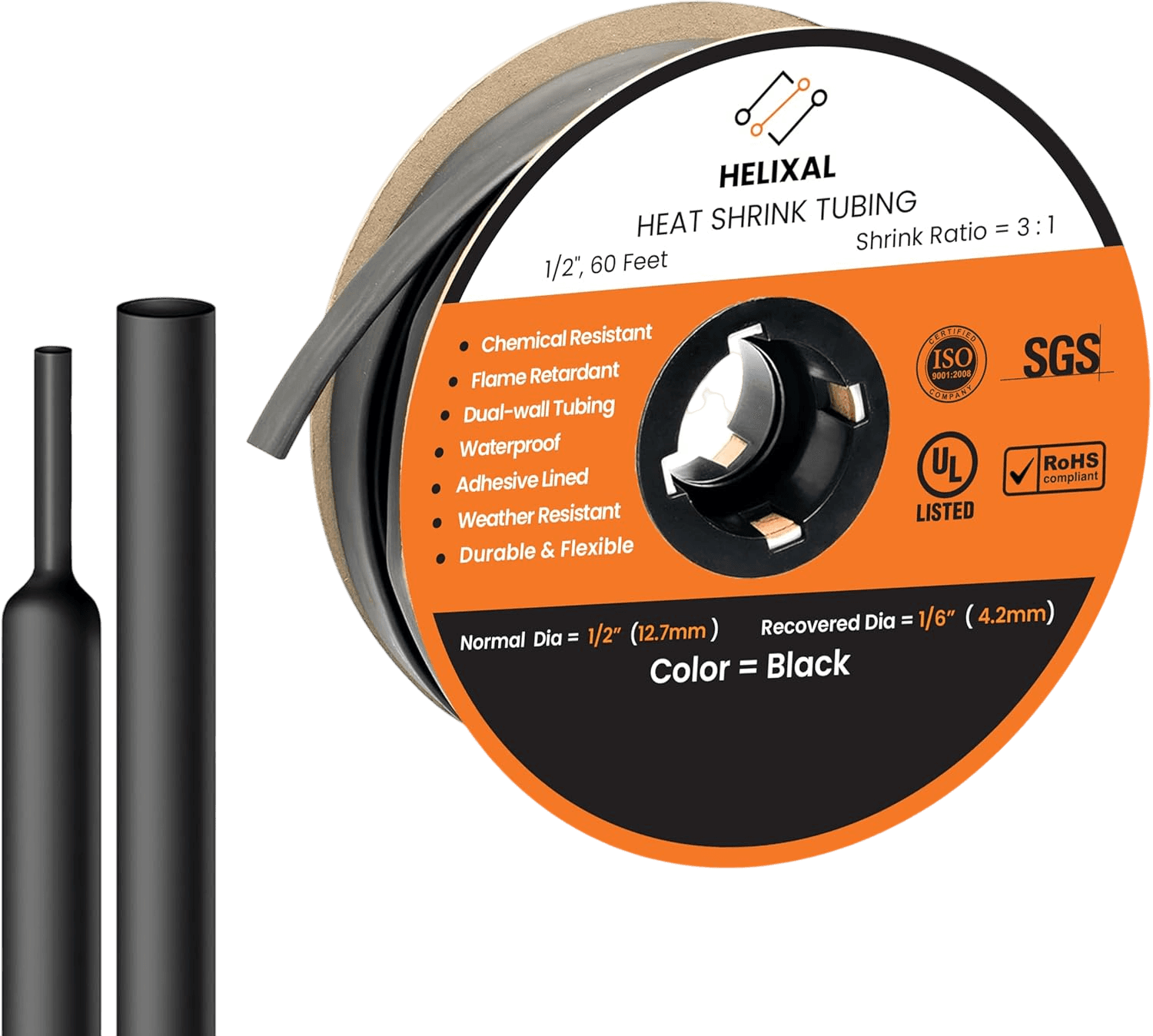
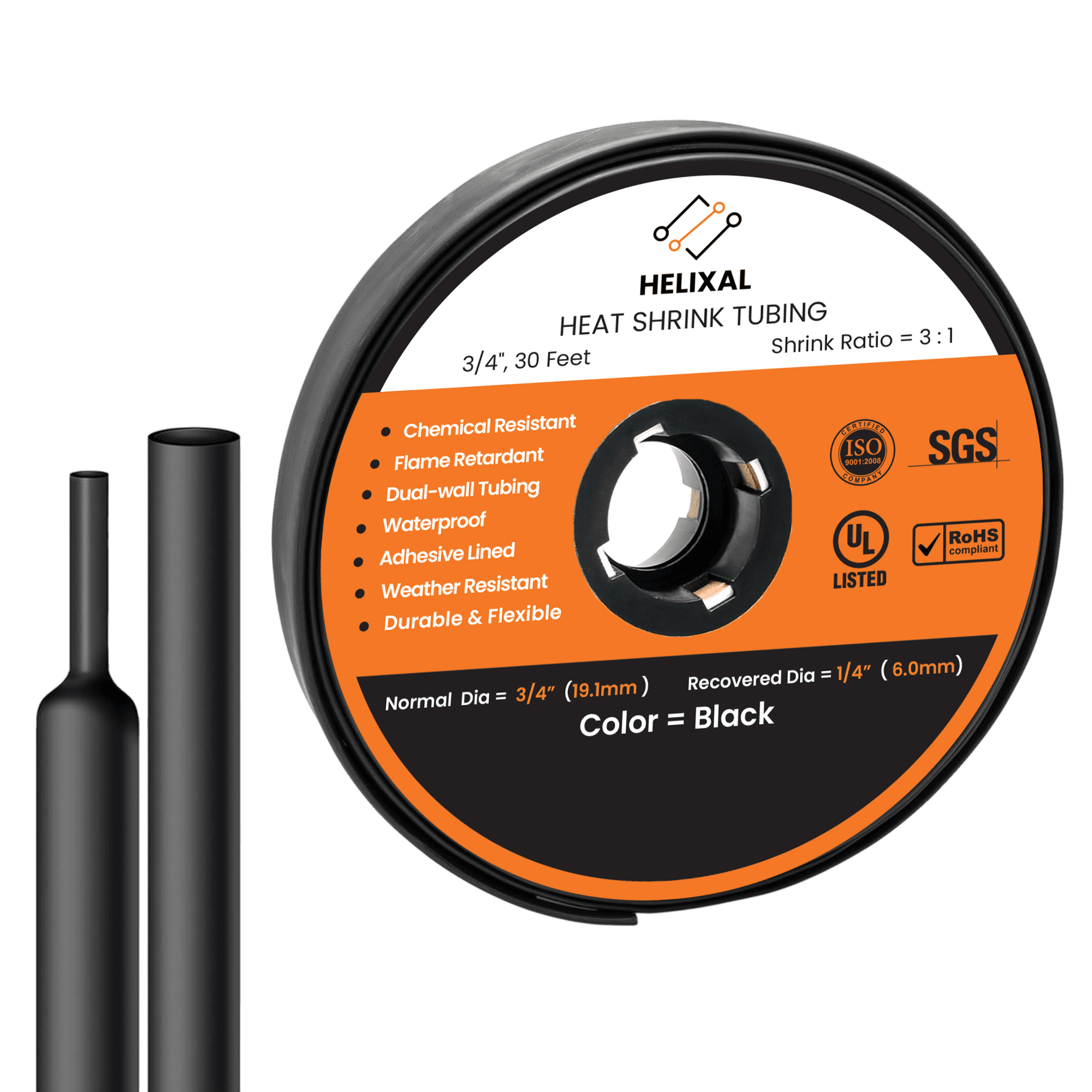
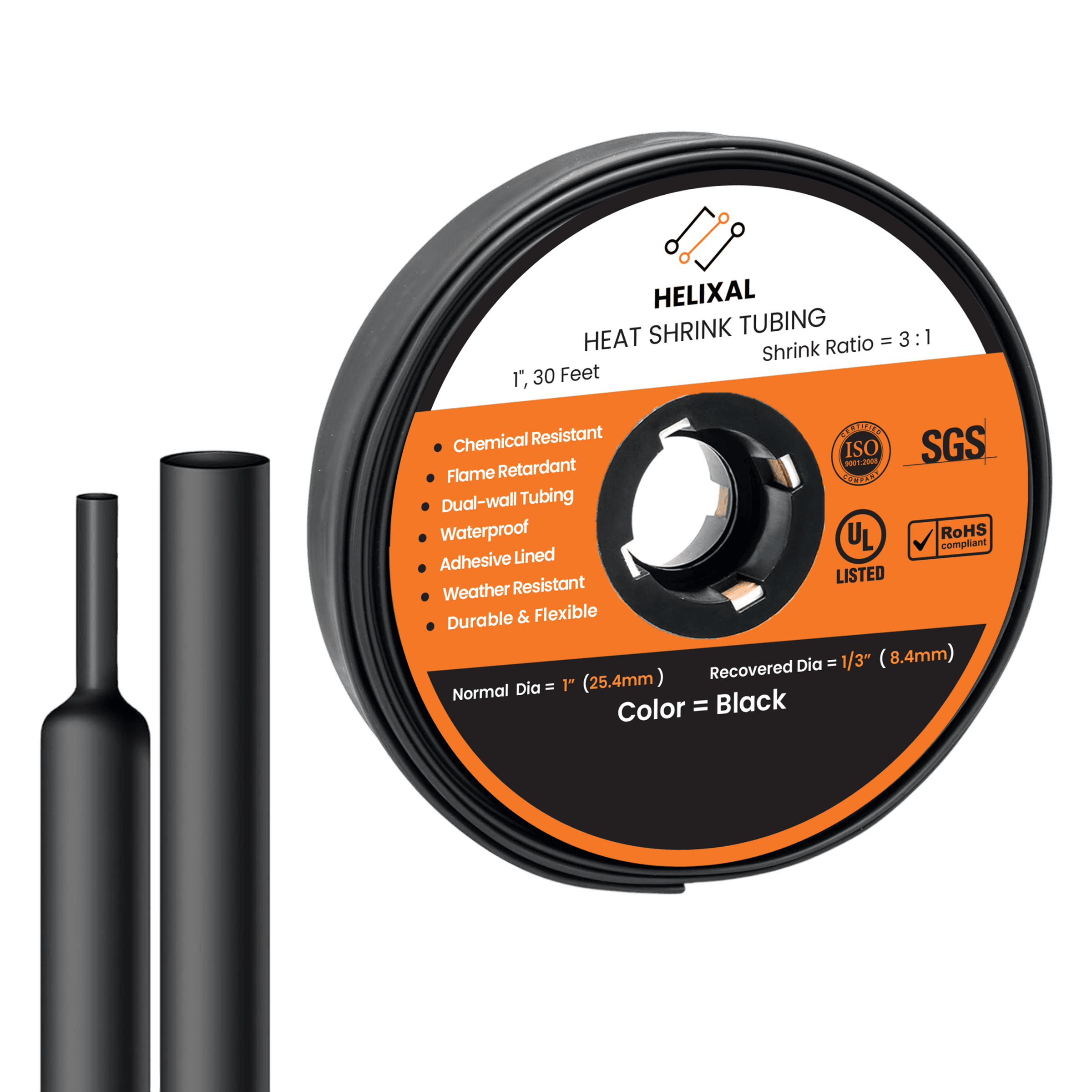
Why a boat is the hard case.
Corrosion on a boat works from the inside out. Salt water wicks along stranded copper underneath the insulation, so the strands go green inside a jacket that still looks perfect. Nothing is visible until the circuit starts reading voltage drop, and by then the damage has usually travelled well past the joint itself.
Everything else on board compounds it. A hull works constantly, so joints see vibration and flex that walk an unbonded sleeve along the wire. Lockers and engine spaces cycle through condensation every night. Deck and mast runs take direct UV and spray. Each of those alone is survivable; together they are what turns a tidy repair into a fault two seasons later.
Adhesive-lined dual wall answers the whole set at once. The liner melts and flows into the strands and along the insulation, then sets — so the sleeve is bonded rather than resting, and the joint is closed at both ends instead of merely covered. Do the electrical work properly first: a sealed sleeve over a poor crimp just hides a joint that is still going to fail.
The full walkthrough — conductor choice, ABYC E-11 context, and the application sequence — is in the best heat shrink for marine wiring.
Marine questions.
What is marine grade heat shrink tubing?
Marine grade heat shrink is adhesive-lined dual wall tubing, almost always at a 3:1 shrink ratio. The outer wall is the polyolefin that shrinks; the inner wall is a hot-melt adhesive that flows when heated and then sets, bonding to the wire insulation and to itself. That bond is what makes it marine grade — an ordinary single-wall sleeve insulates a joint but does not seal it, so salt water still wicks in at the ends. There is no certifying body that awards the term, so treat "marine grade" as a description of construction rather than a certification, and check that the tubing you are buying is genuinely adhesive lined.
Does ABYC require adhesive-lined heat shrink?
Not by name. ABYC E-11 governs AC and DC electrical systems on boats and sets requirements around conductor type, ampacity, and protecting connections from corrosion — it specifies the outcome rather than mandating one product. Adhesive-lined heat shrink is the common way to meet that intent on a crimped joint, which is why it is standard practice in the trade rather than a rule. If you are sizing conductors for a run, work from the ABYC ampacity tables first, then seal the terminations.
Why does salt water damage a joint that looks fine?
Because the damage happens inside the insulation, not on the surface. Salt water wicks along stranded copper by capillary action and corrodes the strands from within, so a connection can read fine on a multimeter, look clean from outside, and still be losing conductor. It shows up later as heat, voltage drop, or an intermittent circuit that is very hard to trace. Tinned copper slows this considerably; a sealed termination stops the water entering in the first place.
What size do I need for bilge pump wiring?
Bilge pump runs are typically 16 to 14 AWG, which takes 1/8" or 3/16" in a 3:1 dual wall. The size matters less than the seal here — a bilge pump joint sits in the one part of the boat that is wet by design, often below the float switch, and it is the single most common place we see corroded connections. Seal both the pump and the float switch terminations, and where you can, position the joint above the expected water line rather than relying on the seal alone.
Is marine heat shrink the same as automotive?
The construction is the same — adhesive-lined dual wall serves both, which is why the tubing is often sold under either name. The environments differ in one important way: marine work adds sustained immersion and continuous salt exposure, where a vehicle mostly sees intermittent spray and road salt. That makes sealing non-negotiable on a boat, and it is why ABYC E-11 sets a higher bar for conductors and terminations than most automotive practice does.
Can I use a heat gun safely on a boat?
Yes, with the obvious precautions. Work with the battery isolated, keep the gun away from fuel lines, fuel tanks and anything solvent-soaked, and be aware that many bulkheads and liners are cored or GRP and will scorch. In a tight locker a reflector nozzle gives you far more control than an open barrel. Shrink from the middle of the sleeve outwards so air and excess adhesive push out of both ends — a small bead of adhesive at each end is the visual confirmation that the joint is sealed.
Related: the 3:1 dual wall line, automotive heat shrink, battery terminals, and the size calculator.